Medical Supply Giant Medline Debuts on Nasdaq After Record Offering

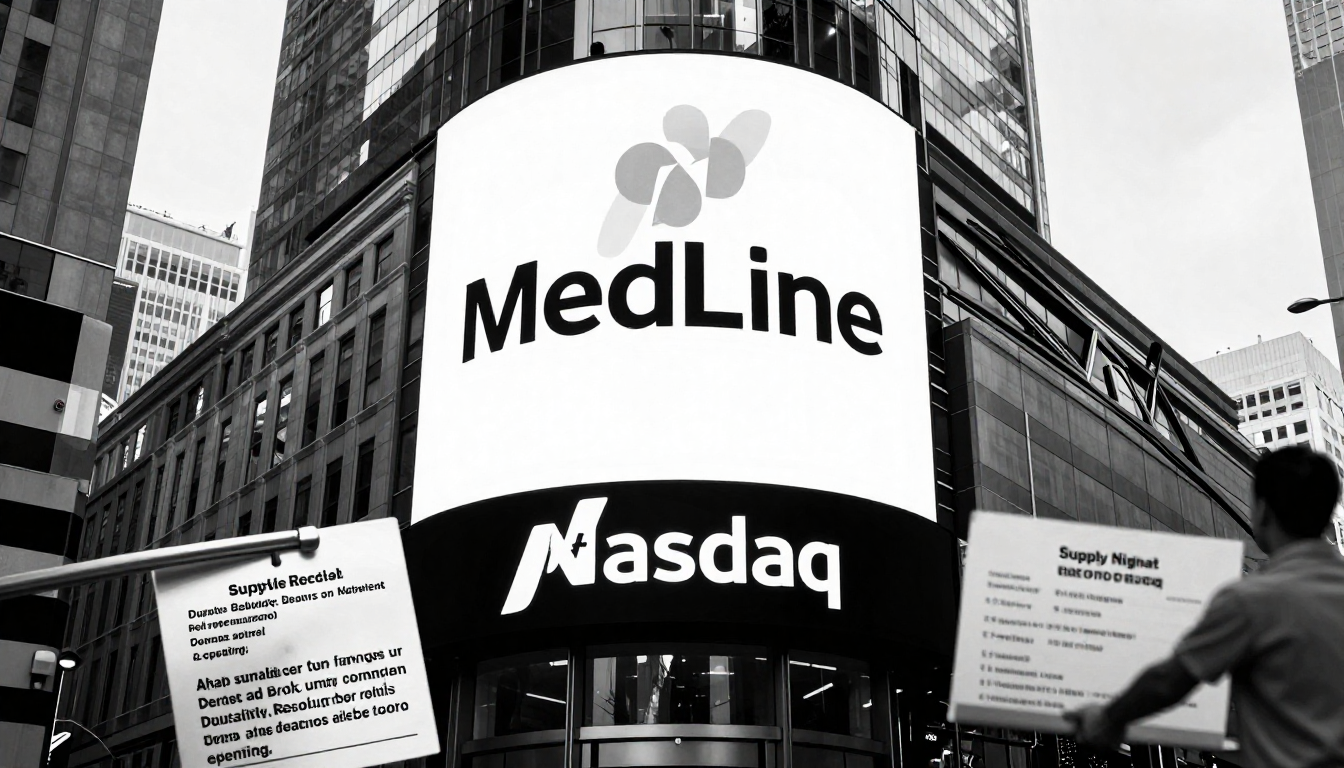
According to CNBC, Medline completed its initial public offering on December 17, 2025, raising $6.26 billion. The Northfield, Illinois-based company sold 216 million shares at $29 each. Shares opened at $35 and closed at $41, representing a 41% gain. The debut values Medline at approximately $54 billion.
The offering represents the largest U.S. IPO since Rivian's $13.7 billion listing in November 2021. Medline operates as a manufacturer and distributor of medical supplies. The company manages roughly 335,000 products including surgical kits, gloves, gowns, and wheelchairs. Three private equity firms acquired Medline in 2021 for $34 billion. Blackstone, Carlyle, and Hellman & Friedman structured the deal as a leveraged buyout.
Medline reported $20.6 billion in net sales for the nine months ending September 27, 2025. Net income reached $977 million during this period. The company posted $911 million in net income on $18.7 billion in sales during the same period in 2024. Goldman Sachs, Morgan Stanley, BofA Securities, and J.P. Morgan served as lead underwriters.
Impact on Private Equity Returns and Debt Reduction
The IPO provides an exit mechanism for private equity investors after four years of ownership. At the opening price, the three firms achieved a valuation increase from their $34 billion investment. Medline carried approximately $16.8 billion in total debt as of September 2025. The company plans to use most proceeds to repay outstanding term loan facilities.
According to EY Global IPO Trends, private equity-backed IPO listings more than doubled year-over-year in the first nine months of 2025. This trend appears concentrated in the U.S., Greater China, and Nordic regions. Strong post-IPO performance in sectors adapting to digital transformation has increased PE sponsors' confidence in public market exits.
The transaction structure allocated funds from 179 million newly issued shares toward debt reduction. Proceeds from 37 million shares sold by existing holders will purchase equity interests from pre-IPO owners. Medline also granted underwriters a 30-day option to buy an additional 32.4 million shares. The company expects tariffs to reduce pre-tax income by $150 million to $200 million in fiscal 2026.
Healthcare Sector Signals Renewed Appetite for Large Listings
The successful pricing demonstrates institutional demand for established healthcare infrastructure companies. Unlike early-stage biotech firms that dominated recent healthcare IPOs, Medline offers immediate profitability. The company has posted revenue growth every year since its 1966 founding. This includes performance through economic cycles and the COVID-19 pandemic.
Reuters reported that U.S. IPO activity raised $46.15 billion through 2025, excluding blank-check firms. This represents the highest total since 2021. Traditional offerings increased more than 21% compared to 2024. Renaissance Capital noted the market continued recovering despite headwinds from tariffs and government shutdowns.
Medline competes with McKesson and Cardinal Health in medical supply distribution. The company operates 33 manufacturing facilities across multiple countries. About one-third of Medline's branded products are manufactured in-house. The remaining products are sourced from more than 500 suppliers in approximately 40 countries. Medline can deliver orders to 95% of U.S. customers within one day.
CEO Jim Boyle stated the company remains relatively unknown despite its market presence. The public listing provides increased visibility and marketing opportunities. Medline originally went public in 1972 before the Mills brothers took it private again in 1977. The company employs more than 43,000 workers worldwide across operations in over 100 countries.
Further Reading
For deeper insights into global adoption trends, our Alternative Financial Systems Index tracks regulatory frameworks and adoption metrics across 50 countries. The index provides analysis of how different jurisdictions structure their approach to emerging financial infrastructure and market development.